Overview and Basics
- Name in Chinese: Commonly referred to as "Chángchéng" (长城), which translates to “Long Wall.”
- Location: Primarily traverses northern China, spanning multiple provinces and municipalities (e.g., Hebei, Beijing, Tianjin, Liaoning, Shanxi, Shaanxi, Gansu, Ningxia, Inner Mongolia).
- UNESCO Status: Declared a UNESCO World Heritage Site in 1987.
- World Record: Often described as the longest man-made structure in the world.
Length and Dimensions
- Total Measured Length:
- A 2012 official archaeological survey by the National Cultural Heritage Administration of China estimated the total length (all sections from various dynasties) at around 21,196 kilometers (13,170 miles).
- Not all sections remain intact; many have eroded or disappeared.
- Height:
- Varies by section; on average, the walls are about 6–8 meters (20–26 ft) tall.
- Some restored sections, especially from the Ming dynasty era, can reach up to 14 meters (46 ft) in height at certain points.
- Width:
- Generally ranges between 4–5 meters (13–16 ft) at the top (enough for soldiers, horses, and supplies to move along).
- The base can be thicker, typically around 6–7 meters (20–23 ft).
Historical Timeline
- Early Walls (7th century BCE – 3rd century BCE)
- Various smaller walls were built by different states (the Chu, Qi, Yan, and others) to defend against neighbors during the “Warring States” period before China’s unification.
- Qin Dynasty (221–206 BCE)
- Emperor Qin Shi Huang ordered the consolidation of existing walls to protect the northern border from nomadic tribes.
- Many sections were connected for the first time, creating an early version of a unified wall.
- Han Dynasty (206 BCE – 220 CE)
- Extended and fortified sections of the wall further west to secure the Silk Road trade route.
- Some remnants of Han-era walls can still be found in deserts and arid regions.
- Northern and Southern Dynasties, Sui, Tang, etc. (4th – 10th centuries)
- Periodic construction and maintenance of defensive walls, though not as extensive as earlier efforts.
- Ming Dynasty (1368–1644)
- Most of the iconic sections seen today (like those near Beijing) were built or enhanced during this period.
- Constructed with stronger materials, such as bricks and stone, in place of tamped earth alone.
- Massive scale of watchtowers, battlements, and beacon towers.
- Post-Ming Dynasties (Qing Dynasty onwards)
- Fewer large-scale efforts to maintain or rebuild the wall; various sections fell into disrepair, although limited repairs happened in certain regions.
Construction Methods and Materials
- Materials:
- Tamped Earth: An early main material used during the Qin and Han periods.
- Brick and Stone: Dominant during the Ming dynasty; bricks often produced in kilns near the wall construction sites for convenience.
- Wood: Occasionally used for gates, internal structures, or scaffolding.
- Rammed Earth and Gravel: Common in more arid sections of the wall (especially the far western parts).
- Labor Force:
- Included soldiers, peasants, prisoners, and, in some legends, convicts and forced laborers.
- Exact numbers are difficult to determine, but estimates often run into hundreds of thousands of laborers over the centuries.
- Watchtowers and Beacon Towers:
- Spaced strategically to enable signaling (smoke signals, lanterns) and surveillance of approaching enemies.
- Ming-era towers were typically square or rectangular, standing 7–12 meters in height.
Purpose and Functions
- Military Defense:
- Originally built to defend against invasions or raids from northern tribes (e.g., Xiongnu, Mongols).
- Watchtowers and fortresses enabled communications over vast distances.
- Border Control:
- Helped regulate trade and immigration, imposing tariffs on goods entering or exiting.
- Secured sections of the Silk Road, crucial for economic prosperity.
- Symbol of Imperial Power:
- Showcased the might of Chinese dynasties and the government’s ability to mobilize vast resources.
Cultural Significance
- National Icon:
- Considered one of China’s greatest engineering feats.
- Integral to Chinese cultural identity and pride.
- Legends and Folklore:
- Stories like “Meng Jiangnü’s Bitter Weeping” highlight the tragedies of forced labor during its construction.
- Numerous myths about visibility from the Moon or space exist (in reality, it is not clearly visible from the Moon with the naked eye).
- Tourism:
- One of the most famous tourist destinations in the world.
- Popular sections for tourists include Badaling, Mutianyu, Juyongguan, and Jinshanling, which are well-maintained and offer facilities for visitors.
- Receives tens of millions of visitors annually.
Preservation and Challenges
- Restoration Efforts:
- Many sections have been rebuilt or reinforced, especially near major cities (like Beijing).
- Government and UNESCO-backed conservation projects are ongoing.
- Threats:
- Erosion and natural weathering, including wind and rain, especially in the west where desertification is an issue.
- Human damage, such as vandalism or unauthorized removal of bricks.
- Urban development projects and irresponsible tourism can also pose risks.
- Legal Protections:
- China’s cultural relics protection laws prohibit unauthorized demolition or alteration of the wall.
- Penalties for damaging the wall have increased over time to deter vandalism.
Interesting Trivia
- Nickname: Sometimes called the “Longest Cemetery on Earth” due to the high number of laborers who died during construction (though the exact figure remains unverified).
- Visibility from Space:
- A popular myth claims it is visible from the Moon; in truth, it is extremely difficult or impossible to see with the unaided eye from low Earth orbit, let alone the Moon.
- Astronauts have generally reported it is not clearly discernible without magnification.
- Symbolic Influence:
- Has influenced Chinese architecture, folklore, and even language (phrases denoting strong defense or resilience often reference the Great Wall).
- Global Recognition:
- Visited by numerous foreign heads of state and celebrities; an iconic photo-op site.
Modern-Day Statistics
- Visitor Numbers:
- Exact annual figures vary, but some sections near Beijing can see millions of visitors each year (e.g., Badaling can receive upwards of 10 million visitors annually).
- Economic Impact:
- Tourism related to the Great Wall generates substantial revenue for local economies.
- Offers jobs (tour guides, hospitality, maintenance, souvenir vendors, etc.) for nearby communities.
- Ongoing Research:
- Chinese archaeologists and international scholars continue to uncover previously unknown sections, especially in remote areas.
- Modern imaging technologies (like drones and satellite imagery) have revealed hidden or eroded parts.
Key Takeaways
- The Great Wall of China is not one continuous wall but rather a collection of walls and fortifications built over many centuries by different dynasties.
- Its total length (all dynastic periods combined) is over 20,000 kilometers, making it the longest man-made defensive structure on Earth.
- It served both military and socio-economic functions, from fending off invaders to controlling trade and migration.
- Despite restoration efforts, many sections are in disrepair or have disappeared due to natural and human-induced factors.
- It remains one of the most iconic symbols of Chinese heritage, attracting enormous global interest and tourism.
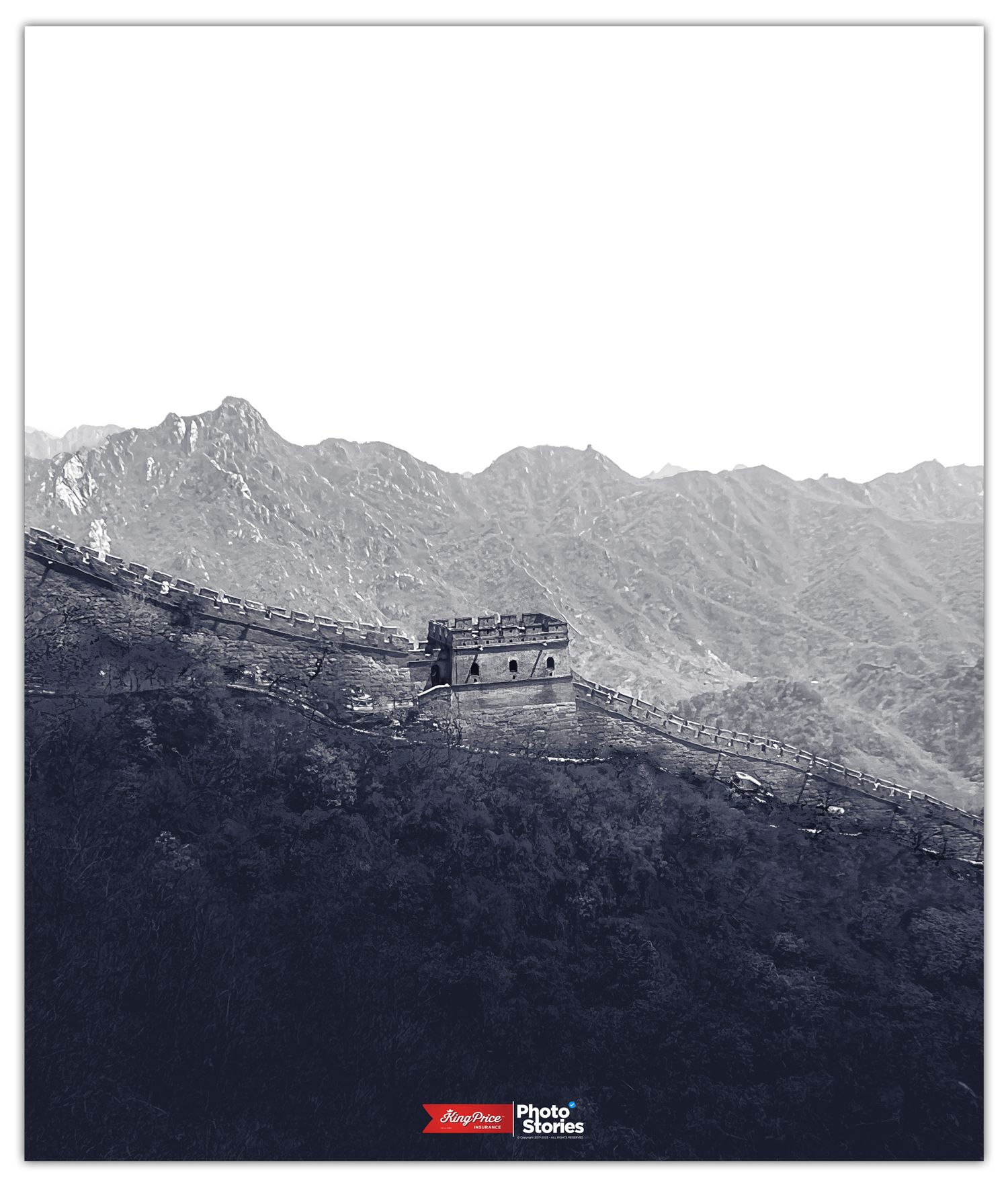
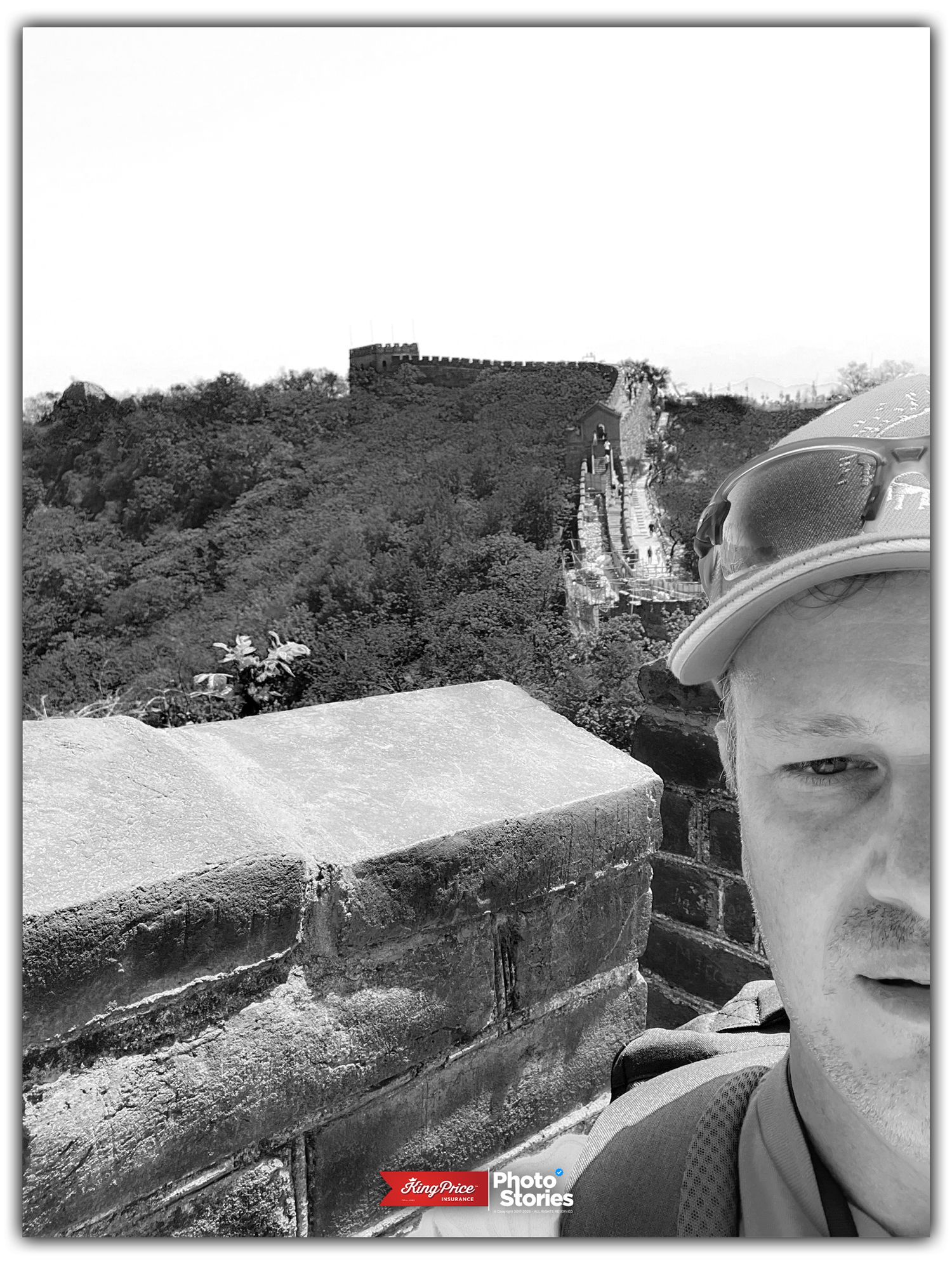
You need to be here to understand the scale of this massive wall...
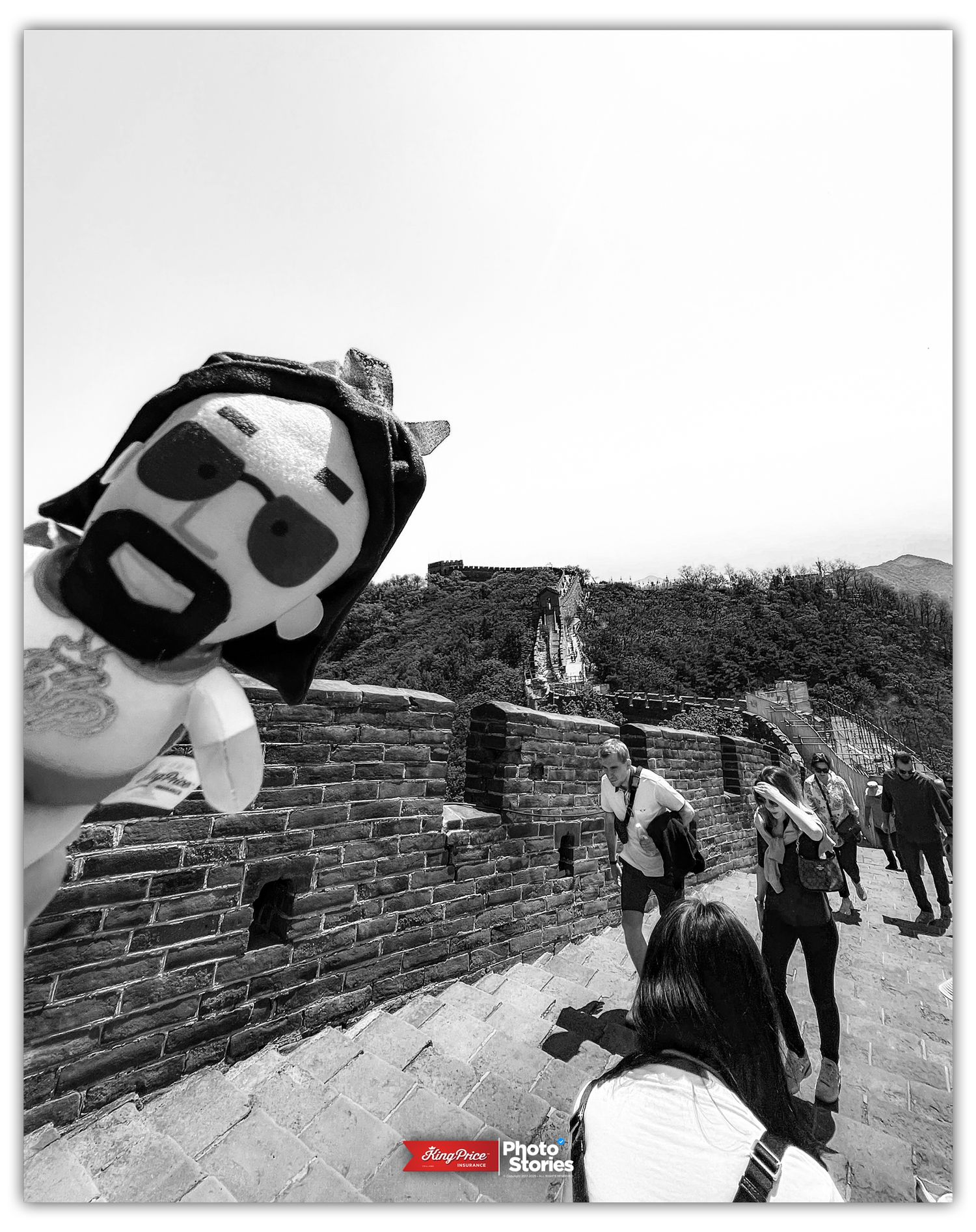
The King also made his way to the top of the wall to go check out the view
